
Need help now? Call the Elder Fraud Hotline: 1-833-FRAUD-11
Senior Scam Center Logo
Senior Scam Center Beta
Get Help

Victim Support

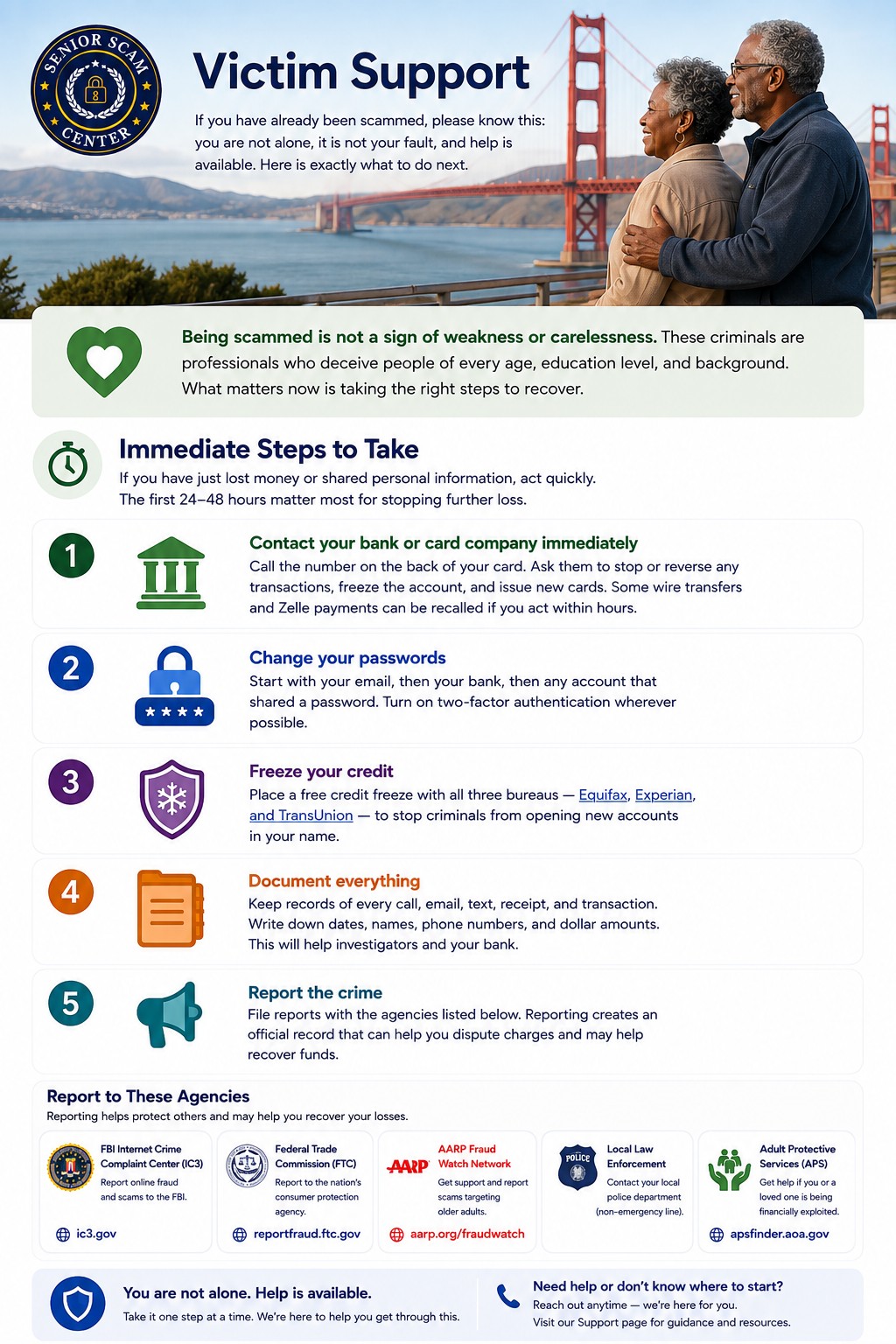
If you have already been scammed, please know this: you are not alone, it is not your fault, and help is available. Here is exactly what to do next.

💚 Being scammed is not a sign of weakness or carelessness. These criminals are professionals who deceive people of every age, education level, and background. What matters now is taking the right steps to recover.

Immediate Steps to Take

If you have just lost money or shared personal information, act quickly. The first 24–48 hours matter most for stopping further loss.

  1. 1

    Contact your bank or card company immediately

    Call the number on the back of your card. Ask them to stop or reverse any transactions, freeze the account, and issue new cards. Some wire transfers and Zelle payments can be recalled if you act within hours.

  2. 2

    Change your passwords

    Start with your email, then your bank, then any account that shared a password. Turn on two-factor authentication wherever possible.

  3. 3

    Freeze your credit

    Place a free credit freeze with all three bureaus — Equifax, Experian, and TransUnion — to stop criminals from opening new accounts in your name.

  4. 4

    Document everything

    Keep records of every call, email, text, receipt, and transaction. Write down dates, names, phone numbers, and dollar amounts. This will help investigators and your bank.

  5. 5

    Report the crime

    File reports with the agencies listed below. Reporting creates an official record that can help you dispute charges and may help recover funds.

Free Help & Emotional Support

You do not have to navigate this alone. These free, confidential services are staffed by people who specialize in helping fraud victims — both with the practical recovery and the emotional toll.

AARP Fraud Watch Helpline

Free, confidential guidance from trained specialists — available to anyone, AARP membership not required.

📞 1-877-908-3360

🌐 aarp.org/fraudwatchnetwork

AARP ReST Program

Free peer-support groups specifically for scam victims, offering a safe place to process the emotional impact and reduce shame.

🌐 AARP ReST Support Groups

Elder Fraud Hotline (DOJ)

Case managers help you report the fraud and connect with local resources and victim services.

📞 1-833-372-8311

🌐 National Elder Fraud Hotline

FTC IdentityTheft.gov

Step-by-step personal recovery plans if your identity or personal information was stolen.

🌐 IdentityTheft.gov

FINRA Securities Helpline for Seniors

Free help if you were defrauded through an investment, broker, or financial advisor.

📞 1-844-574-3577

🌐 FINRA Senior Helpline

988 Suicide & Crisis Lifeline

If the stress feels overwhelming, free 24/7 emotional support is one call or text away. Call or text 988.

📞 988

🌐 988lifeline.org

Coping With the Emotional Impact

The financial loss is only part of what victims experience. Many feel shame, anger, grief, anxiety, or a loss of trust — especially in romance and impersonation scams. These feelings are normal, and they ease with time and support.

  • Talk to someone you trust. Keeping it secret is exactly what the scammers want. Sharing what happened lifts the burden and helps you heal.
  • Be kind to yourself. You were targeted by a criminal who does this for a living. Self-blame is misplaced — the fault lies entirely with the scammer.
  • Avoid isolation. Scammers often cut victims off from family and friends. Reconnecting with loved ones is part of recovery.
  • Watch for "recovery scams." After being scammed, you may be targeted again by criminals promising to get your money back for a fee. No legitimate agency charges upfront fees to recover funds.
  • Consider talking to a counselor. Your doctor, a local senior center, or the 988 Lifeline can connect you with someone to talk to.

🚫 Beware of "Recovery Scams"

After being scammed, some people are targeted a second time by criminals who claim they can "recover your money" — for a fee. This is another scam designed to exploit victims when they are most vulnerable.

  • 🚩No legitimate agency charges upfront fees to recover stolen funds.
  • 🚩The FTC, FBI, and local police never ask for payment to help you.
  • 🚩Be suspicious of anyone who contacts you out of the blue claiming they can get your money back.
  • 🚩Real recovery, when possible, happens through your bank, law enforcement, and official agencies — never through a stranger who found you first.

Ready to Report the Scam?

Filing an official report is an important step toward recovery and helps protect others. We will walk you through exactly where and how.

📝 How to Report a Scam →

Senior Scam Alerts Newsletter

Free weekly alerts backed by real federal cases. Plain language. No jargon.

No credit card. Unsubscribe anytime.