
Identity Theft — Thieves steal your name, Social Security number, and financial information to open accounts, file tax returns, and make purchases in your name — often for months before you notice.
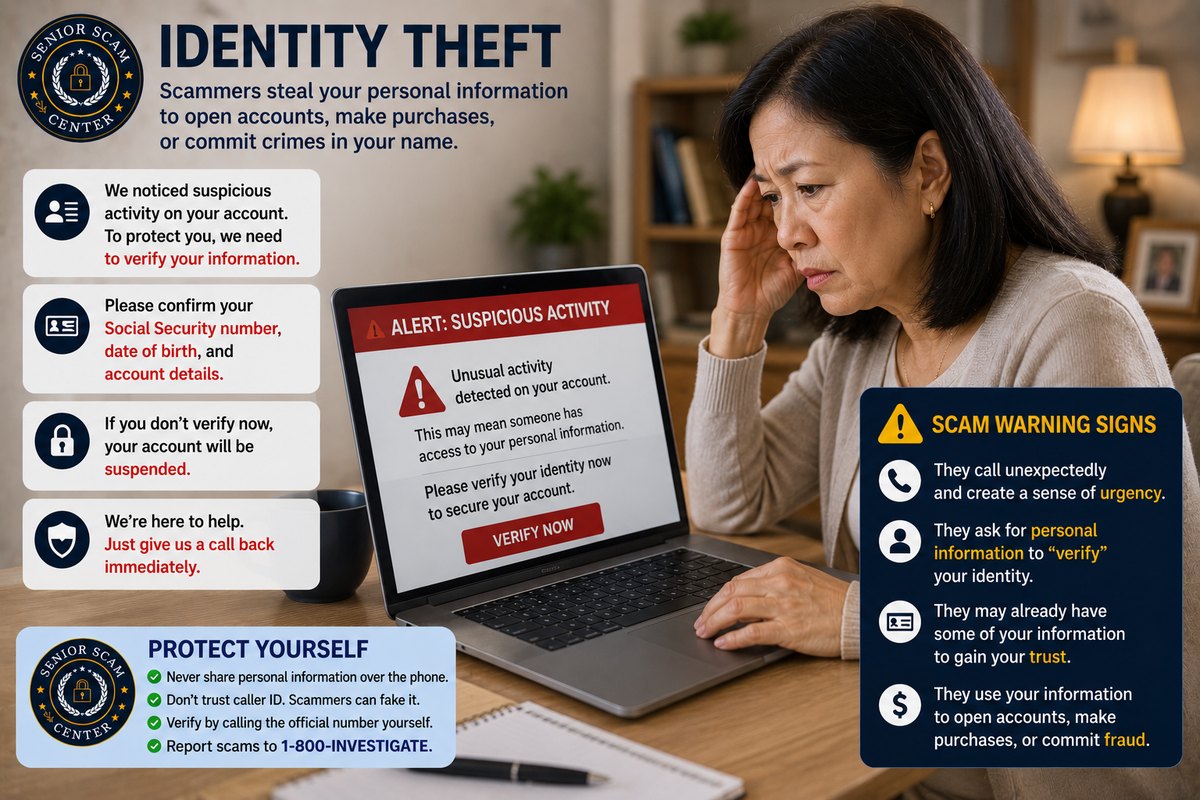
How Thieves Get Your Information
Identity thieves use a wide variety of methods — from high-tech hacking to low-tech mail theft:
- •Phishing emails and texts: Fake messages that look like they're from your bank, Medicare, or the IRS — designed to trick you into typing in your personal information.
- •Data breaches: Hackers break into company databases containing millions of names, Social Security numbers, and passwords. Your information may have already been exposed in a breach you don't know about.
- •Mail theft: Thieves steal bank statements, tax forms, new credit cards, and Medicare cards from mailboxes. Use a locked mailbox or a P.O. box if possible.
- •Card skimmers: Small devices placed on ATMs or gas pumps that secretly capture your card number and PIN. Always wiggle the card reader before inserting your card.
- •Dumpster diving: Old documents — statements, bills, pre-approved credit offers — can be goldmines for thieves. Shred anything with your name, address, or account numbers before discarding.
15.4 Million
Americans are victims of identity theft each year according to the Bureau of Justice Statistics. Older adults are disproportionately targeted because of accumulated savings and good credit.
Tax Identity Theft: File Early to Beat Them
Tax identity theft happens when a criminal uses your Social Security number to file a tax return and steal your refund. You don't find out until you file your own return and the IRS says one has already been filed in your name.
Recovering from tax identity theft can take over a year and requires working directly with the IRS to sort out. The best defense is to file your tax return as early as possible — before a thief can file first.
✅ IRS Identity Protection PIN
Sign up for a free IRS Identity Protection (IP) PIN at irs.gov/ippin. This is a 6-digit number only you and the IRS know. Without it, no tax return can be filed in your name. It's one of the most powerful protections available — and it's free.
⚠️ If You Suspect Tax ID Theft
File IRS Form 14039 (Identity Theft Affidavit) immediately. You can get it at irs.gov or call the IRS Identity Protection Unit at 1-800-908-4490.
Medical Identity Theft: The Most Dangerous Kind
Medical identity theft happens when someone uses your name and health insurance information to get medical care, prescriptions, or equipment. It is the most dangerous form of identity theft because it corrupts your medical records.
If a thief uses your identity to receive medical treatment, their blood type, allergies, and medical history may end up in your records. In an emergency, this could be life-threatening — a doctor treating you may work from a record that belongs to someone else.
Medical identity theft can also exhaust your insurance benefits, cause legitimate claims to be denied, and damage your credit through unpaid medical bills in your name.
✅ Review Your Explanation of Benefits
Every time you receive an Explanation of Benefits (EOB) from your insurance company, review it carefully. Look for services you did not receive or providers you don't recognize. Report anything suspicious to your insurer immediately.
Warning Signs & Steps to Take
You may be a victim of identity theft if you notice:
- •Bills or collection notices for accounts you didn't open.
- •Unfamiliar charges on your bank or credit card statements.
- •The IRS notifies you that more than one tax return was filed in your name.
- •Your credit score drops suddenly for no apparent reason.
- •You stop receiving mail you expect (bills, statements) — thieves sometimes redirect mail.
✅ Freeze Your Credit — It's Free
A credit freeze (also called a security freeze) prevents anyone from opening new credit in your name — even you, until you lift it. It's free at all three bureaus: Equifax (equifax.com), Experian (experian.com), and TransUnion (transunion.com). This is the single most powerful thing you can do to prevent new-account fraud.
✅ Get Your Free Credit Reports
You are entitled to one free credit report per year from each of the three bureaus. Visit annualcreditreport.com — the only official, federally authorized site. Review each report carefully for accounts you don't recognize.
✅ Report Identity Theft
Report to the FTC at identitytheft.gov — this creates an official identity theft report and gives you a personal recovery plan. File a report with your local police department as well. Contact each institution where fraud occurred.