Need help now? Call the Elder Fraud Hotline: 1-833-FRAUD-11
Senior Scam Center Logo
Senior Scam Center Beta
Get Help

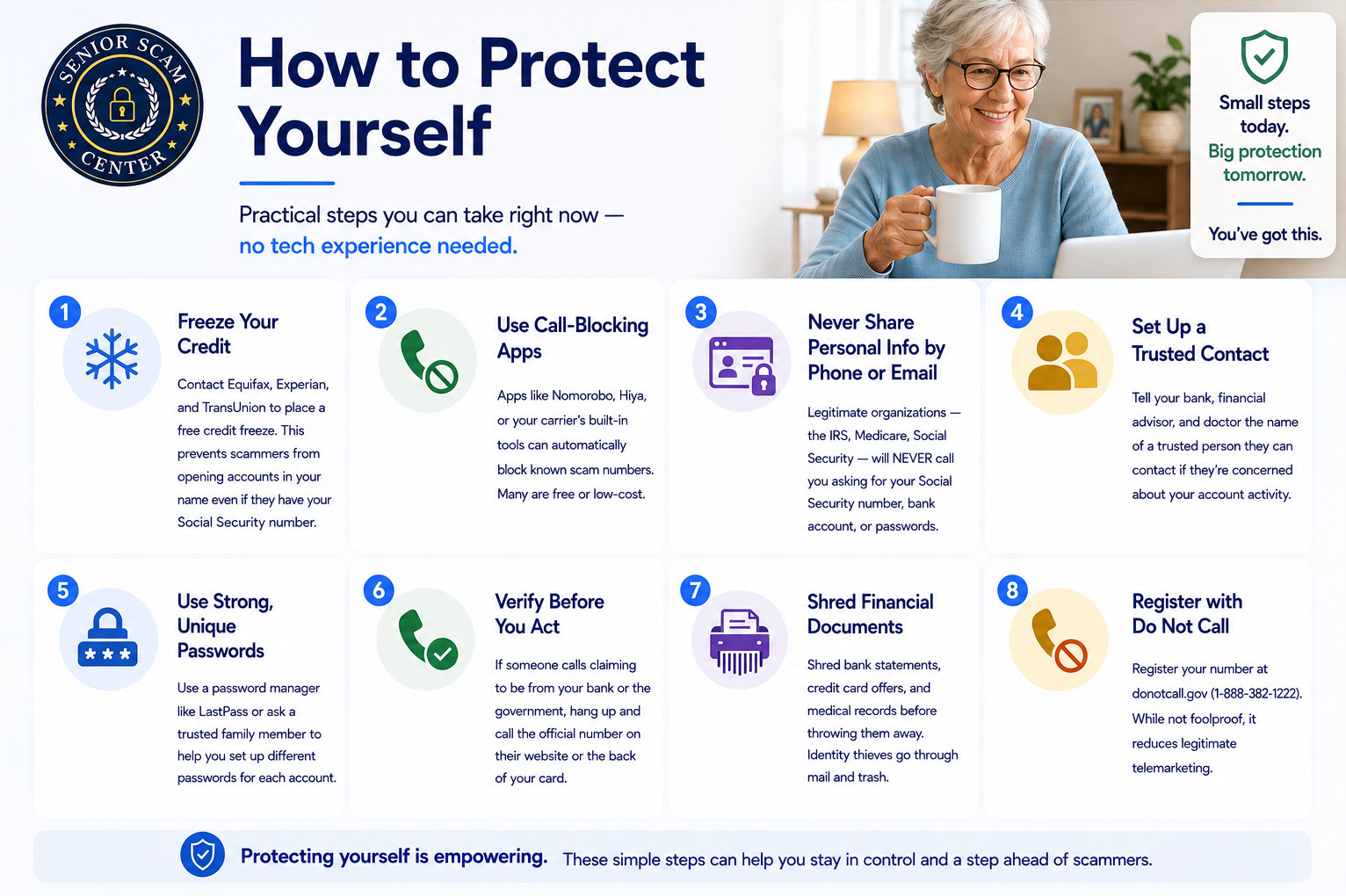
How to Protect Yourself

Practical steps you can take right now — no tech experience needed.

← Back to Protect Yourself
1

Freeze Your Credit

Contact Equifax, Experian, and TransUnion to place a free credit freeze. This prevents scammers from opening accounts in your name even if they have your Social Security number.

2

Use Call-Blocking Apps

Apps like Nomorobo, Hiya, or your carrier's built-in tools can automatically block known scam numbers. Many are free or low-cost.

3

Never Share Personal Info by Phone or Email

Legitimate organizations — the IRS, Medicare, Social Security — will NEVER call you asking for your Social Security number, bank account, or passwords.

4

Set Up a Trusted Contact

Tell your bank, financial advisor, and doctor the name of a trusted person they can contact if they're concerned about your account activity.

5

Use Strong, Unique Passwords

Use a password manager like LastPass or ask a trusted family member to help you set up different passwords for each account.

6

Verify Before You Act

If someone calls claiming to be from your bank or the government, hang up and call the official number on their website or the back of your card.

7

Shred Financial Documents

Shred bank statements, credit card offers, and medical records before throwing them away. Identity thieves go through mail and trash.

8

Register with Do Not Call

Register your number at donotcall.gov (1-888-382-1222). While not foolproof, it reduces legitimate telemarketing.

Now that you know what to do, learn what to watch out for.

See Common Warning Signs →

Senior Scam Alerts Newsletter

Free weekly alerts backed by real federal cases. Plain language. No jargon.

No credit card. Unsubscribe anytime.