
Impersonation Scams — Criminals pretend to be the IRS, Social Security, your bank, law enforcement, or even a family member — using authority, fear, and urgency to pressure you into sending money.
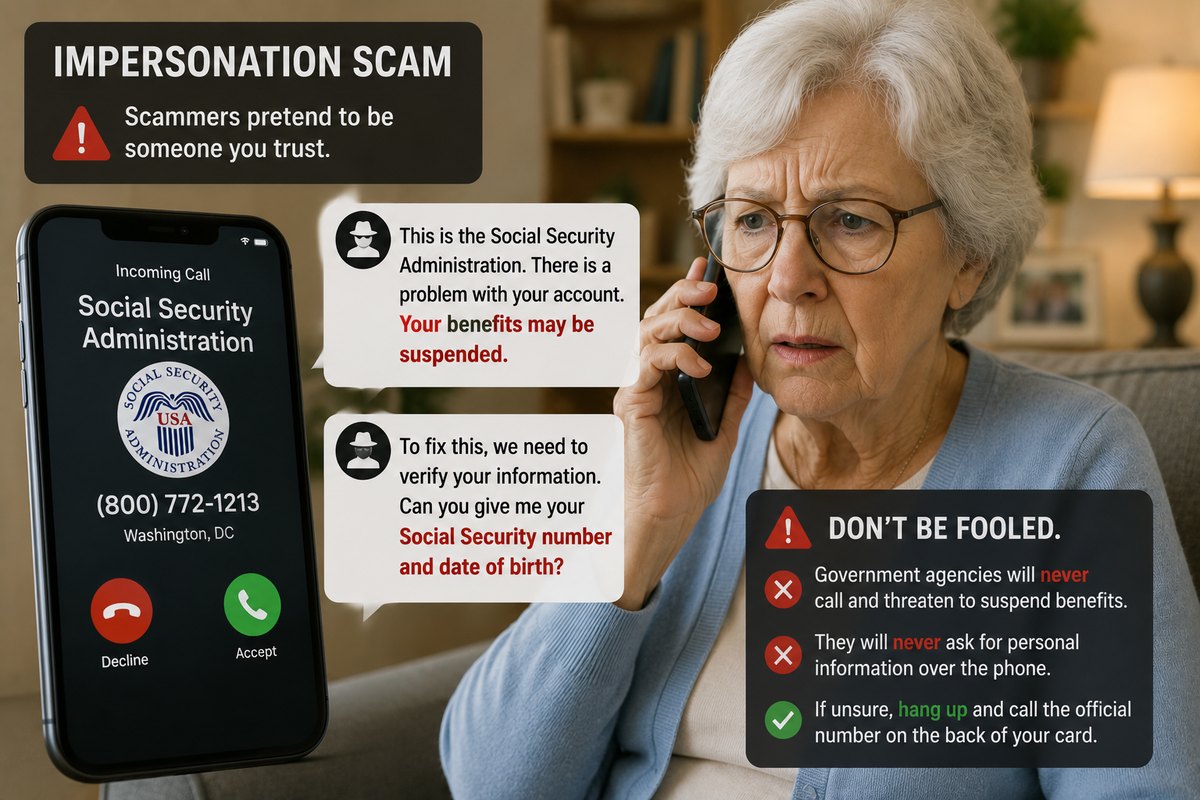
How Impersonation Scams Work
Impersonation scams share a three-part formula: authority, fear, and urgency. The scammer claims to represent a powerful entity (the IRS, Social Security Administration, your bank, or a law enforcement agency), creates a frightening situation (your SSN has been "suspended," you owe back taxes, there's a warrant for your arrest), and demands immediate action before you have time to think or verify.
Types of impersonation scams include:
- •IRS impersonation: "You owe $2,400 in back taxes. Pay now or face arrest." The real IRS always sends a letter first and never demands gift cards.
- •Social Security threats: "Your Social Security number has been used in a crime. Your benefits will be suspended unless you verify your identity immediately."
- •Fake bank fraud departments: A caller says your account is being drained. They ask you to move your money to a "safe account" — which they control.
⚠️ Key Fact
The Social Security Administration, IRS, and Medicare will NEVER call you to demand immediate payment, threaten arrest, or ask for your Social Security number. Hang up and call the agency directly using a number from their official website.
The Grandparent Scam
The grandparent scam is one of the cruelest impersonation frauds. A scammer calls pretending to be a grandchild — or a lawyer, police officer, or bail bondsman representing a grandchild — who is in serious trouble: a car accident, arrested at the border, or in a foreign jail.
The "grandchild" begs: "Please don't tell Mom and Dad, Grandma — I'm so embarrassed. I just need bail money." The urgency is real, the emotion is overwhelming, and the voice may even sound like your grandchild (see AI voice cloning below).
A courier may even show up at your door to collect cash "on behalf of the attorney." Thousands of dollars can be lost before anyone realizes what happened.
✅ Simple Defense: The Code Word
Establish a secret family code word right now with your grandchildren and children. If anyone calls in an "emergency," ask for the code word. A real family member will know it. A scammer will not.
AI Voice Cloning: When It Sounds Like Your Family
Artificial intelligence can now clone a person's voice from just a few seconds of audio — audio that may be freely available on social media. Scammers use this technology to make fake emergency calls sound exactly like your grandson, daughter, or spouse.
If you hear a familiar voice saying they're in trouble, do not assume it's real. The technology is that good.
⚠️ What To Do
Hang up and call the family member directly on a number you already have saved. If they answer, there's no emergency. If you can't reach them, call another family member to verify before sending any money.
$2.7 Billion
Lost to impersonation scams in 2023, according to the FTC. Government and business impersonation together make up the single largest fraud category by dollars lost.
Warning Signs & What To Do
- •Caller demands immediate action — "You must decide right now."
- •Caller asks you to keep the call secret from family.
- •Payment demanded via gift cards, wire transfer, or cryptocurrency.
- •Caller ID shows an official-looking number — these can be faked (spoofed).
- •Story shifts and changes — scammers improvise when questioned.
✅ Always Verify Independently
Hang up and call the agency or family member back using a number you find yourself — from their official website, the back of your card, or a number you already have. Do not use a number the caller gave you.
✅ Report It
Report government impersonation to the FTC at reportfraud.ftc.gov. Report to the FBI at ic3.gov if you lost money. Call the Elder Fraud Hotline at 1-833-FRAUD-11 for guidance.